.


"ஒன்றே குலம்; ஒருவனே தேவன்" – ஆசான் திருமூலர். நீதியில்லாதவனே சாதியை வகுத்திட்டான்; நெறிகெட்ட சாதிமுறையை ஒழிப்போம் வாரீர்.

விடுதலை என்பது ஆயிரம் கொலைகளைச் செய்பவன் பெற்றுத் தருவதல்ல; ஆயிரம் உயிர்களைக் காப்பற்ற வல்லவன் பெற்றுத் தருவதே உண்மையான விடுதலை.

Bookmark and Share on Facebook, Twitter +53 other..
Showing posts with label Eelam. Show all posts

Thursday, 3 June 2010

NDTV Documentary Video: “Blood and Water”.


The Sri Lankan High Commissioner for India had appealed about the documentary programme which was aired over the Indian NTV television to withdraw the programme. The request was made by Prasad Kariyawasam in regard to the programme which was telecast in the name of “Blood and Water”.

The programme which was telecast showed, three to 6 lacks of people are living in the Vavuniya interment camps behind the barbed fence. Kariyawasam pointed out that only 30 thousand persons are living at the Vavuniya camps. He said the many programmes telecast in the programme were recorded one year before. Further another segment consisting about 300 Indian fishermen had been arrested by the Sri Lankan navy forces for the past many years was also accommodated in the programmes which is totally false was stated by Prasad Kariyawasam.

He said, in addition to this, the refugees due to economic problems are intruding to Australia was mentioned in the programme which cannot be accepted . Hence he requested the NTV Television administration to grant him an opportunity to explain the actual situation

Saturday, 29 May 2010

Rajapaksa extremism cannot be changed: Lee Kuan Yew

Singapore's Minister Mentor Lee Kuan Yew, in a newly released book titled "Conversations with Lee Kuan Yew,' says that Tamils have been in the island of Sri Lanka as long as the Sinhalese, and that Sri Lanka is not a happy "united" country. The present president of Sri Lanka believes he has settled the problem now that the Tamil Tigers are killed, and wants others to believe that too," and Lee observes:"I don't think they [Tamils] are going to be submissive or go away." Referring to the Sri Lankan president he said: "I have read his speeches and I knew he was a Sinhala extremist. I cannot change his mind." Mr Lee Kuan Yew also discusses ethnic cleansing in the book, which was released on Wednesday in Singapore.

Tom Plate, an American columnist, uses the book to dispel some Western perceived myths about Singapore, writes Imelda Saab of Channel News Asia.

The author of the book notes that Mr. Lee is against democracies that doesn't work and that the Minister Mentor is also against defending these countries just because they are democracies. "The position strikes me as more consistent than the US relationship with other democracies: we support them only when we approve of them, denouncing them (or worse) when we don't," observes Tom Plates.

Prof. Tom Plate is the founder of the Asia Pacific Media Network (APMN) and director the Pacific Perspectives Media Center, a subsidiary of the APMN. Tom's regular columns on Asia appear in newspapers and websites across the globe and he is the author of seven books including 'Confessions of an American Media Man,' and 'Understanding Doomsday: A Guide to the Arms Race for Hawks, Doves and People'.
Conversations with Lee Kuan YewThe book, written following two days of intensive interviews in 2009, is the first in a series published by Marshall Cavendish on Giants Of Asia.

In a 2007, International Herald Tribune interview Mr Lee Kwan Yew said, "[t]he mistakes of Sri Lanka and other newly independent 'failed states' made Singapore go in a different direction.

"When Singapore broke off from the Malayan Federation it had a hostile neighbor and a population made of Chinese, Malays and immigrants from the Indian subcontinent. The basis of a nation just was not there. But the advantage we had was that we became independent late," Lee recalled in a wide ranging interview with the IHT.

"In 1965, we had 20 years of examples of failed states. So, we knew what to avoid - racial conflict, linguistic strife, and religious conflict. We saw Ceylon," Lee added.

Lee Kuan Yew, born 16 September 1923, is a Singaporean statesman. He was the first Prime Minister of the Republic of Singapore, from 1959 to 1990. As co-founder and first secretary-general of the People's Action Party (PAP), he led the party to a landslide victory in 1959, oversaw the separation of Singapore from the Federation of Malaysia in 1965 and its subsequent transformation from a relatively underdeveloped colonial outpost with no natural resources into a "First World", Asian Tiger.

Lee Kuan Yew has remained one of the most influential political figures in South-East Asia.

Courtesy:
TamilNet
http://www.tamilnet.com/art.html?catid=13&artid=31857

Friday, 28 May 2010

VIDEO: Aljazeera 101 East - A new Sri Lanka

In his first international interview since the end of the conflict, 101 East speaks with Mahinda Rajapaksa, Sri Lanka's president, about the future of Sri Lanka.

Wednesday, 26 May 2010

Indian congress gov't is guilty of aiding war crimes

Indian congress gov't is trying hard to cover up of the allegations that it supplied chemical weapons to Sri Lanka in the war against Tamils. Congress gov't is suppressing any voice about the war crimes it has committed by introducing new laws. It's not a secret that India aided the war in Sri Lanka against Tamils. Now the Congress gov't is trying hard in the international arena to block any moves on Sinhala war crimes against innocent Tamils & other human rights abuses committed by Rajapakse regime


The Government of Tamil Nadu has gazetted a notification by the Indian Central Government's Ministry of Home Affairs, dated 14 May, banning the Liberation Tigers of Tamil Eelam (LTTE) as an 'unlawful association'. The announcement falsely linked 'Tamil Eelam' as threatening the 'sovereignty and territorial integrity of a part of the territory of India'. Questioning when Tamil Eelam became part of Indian territory, Eezham Tamil circles in the diaspora said the notification reflected the guilt related paranoia of New Delhi and Chennai and urged the democratic bodies in the diaspora and the legal activists in Tamil Nadu to address the false interpretation, politically and legally.

read more @
http://tamilnet.com/art.html?catid=13&artid=31825

Wednesday, 19 May 2010

“Unsurrendered Dignity and Unfallen Bravery,”

“Unsurrendered Dignity and Unfallen Bravery,”

“War is politics with bloodshed, our way would be Politics without bloodshed," - Seeman


New political party in Tamil Nadu vows to fight for Tamil Eelam
[TamilNet, Wednesday, 19 May 2010, 18:18 GMT]

Around 75,000 Tamils, most of them of younger generation, attended the May Remembrance of Vanni massacre and the inauguration rally of Naam Thamilar political party at Virakanoor in the city of Madurai in the Tamil Nadu state of India, vowing to fight for the creation Tamil Eelam by politically capturing the power of the Tamil Nadu state as Tamils world over observed Genocidal War Crimes Day on Tuesday, remembering thousands who perished one year ago. “The Tamil Eelam struggle has been transcended into the hands of Tamil Nadu Tamils and the younger generation in particular,” S. Seeman, a Tamil activist and a popular film director told media.


“War is politics with bloodshed, our way would be Politics without bloodshed,’ he told the gathering vowing to take forward the struggle for the freedom of Eezham Tamils and to voice for global Tamil freedom.

"Annan [elder brother] Pirapaharan is the national leader of global Tamils and the Icon for Tamil liberation. We are all younger brothers of our Annan. I am not a chief, but a follower, someone among you,” he told reporters, introducing the party programme of Naam Thamilar (We are Tamils) at Virakanoor in Madurai Tuesday evening.


Mr. Seeman, Professor Dheeran, Professor P. Ramasamy who is the deputy chief minister of the Penang state of Malaysia, Thamizharuvi Maniyan and Sahul Hameed delivered inauguration speeches at the event, which was conducted in a disciplined and organised way, very differently from that of the political rallies in the recent history of Tamil Nadu.

Another notable difference was the active participation of women.

The stage was named Muthukumaran Arangkam, commemorating the young Tamil journalist who burned himself to death condemning India for failing to stop the war in Sri Lanka January last year.


Muthukumaran Arangam was decorated with the photos of ancient Chola kings of Tamil Nadu, Pandara Vanniyan of Vanni, LTTE heroes and political leaders, those who sacrificed their lives for the Tamil cause in Tamil Nadu and elsewhere, and prominent leaders of the past of the ilk of V.O. Cidamparampillai, C. P. Adithanar, the father of the earlier Naam Thamilar movement, Thanthai Periyar and Arignar Anna.

Naam Thamilar party holds the view that Tamil Eelam cannot be born without the Indian state of Tamil Nadu exerting meaningful pressure on the Central Government of India and that a Tamil political leadership should take over the rule of Tamil Nadu.


Mr. Seeman dismisses the ‘Dravidian’ parties as having failed in their historic duty of supporting the liberation of Tamil Eelam, when their help was most needed, especially one year ago during the height of the war.

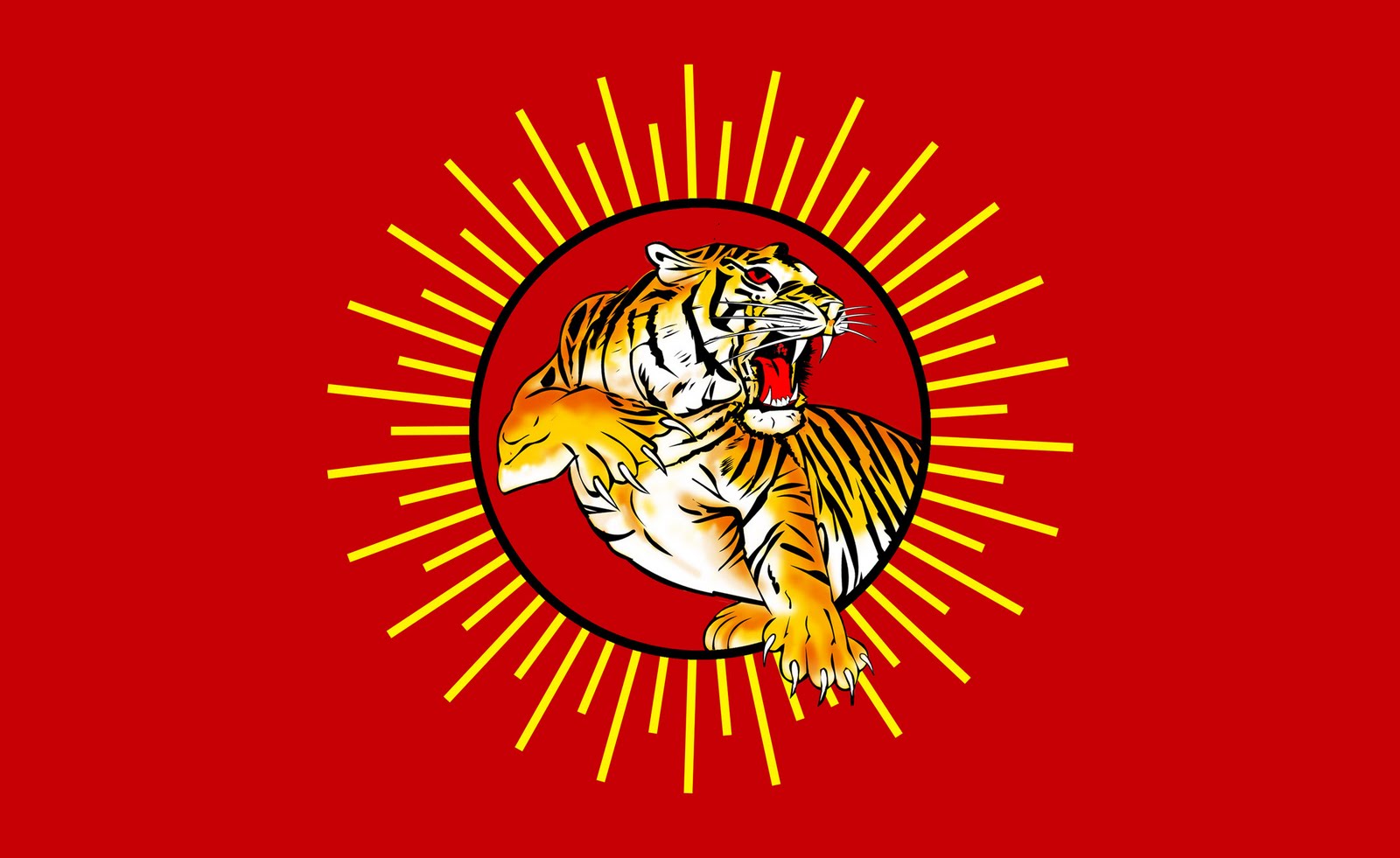
“Unsurrendered Dignity and Unfallen Bravery,” is the slogan of the party launched with Tiger symbol on the day of one-year remembrance of Mu’l’livaaykkaal massacre.


Mr. Seeman, while announcing the flag of the party earlier stated:

"India wouldn't give you freedom without fighting for it. USA wouldn't come to liberate you. China and Japan wouldn't be useful. The Sinhalese wouldn't give in that easily. No state in the world would come to support the creation of Tamil Eelam."

"It is we, Tamils ourselves, who should enforce them all to support the establishment of Tamil Eelam."

"Let me remind you that Tamil Eelam cannot be born without the Indian state supporting it, and that the Indian state wouldn't support it as long as our own Tamil state of Tamil Nadu fails to demand it."

read more @
http://www.tamilnet.com/art.html?catid=13&artid=31786

VIDEO: Louise Arbour talks about Sri Lanka's war crimes

Louise Arbour, a former chief prosecutor in international war crimes trials, told an audience at Chatham House – the foreign policy think tank – that "the [Sri Lankan] government's refusal to distinguish between combatants and non-combatants" and the "sheer magnitude of civilian death and suffering" dealt what she called "the most serious of body blows to international humanitarian law".

Sunday, 4 April 2010

மே 15 ,16 / 2010: மீண்டும் உலகத்தமிழர் வீதிகளில் இறங்க அழைப்பு.

சனநாயக, சாத்வீக ரீதியில் உலக அரங்கில் விழிப்பணர்வை ஏற்படுத்துமாறு வேண்டுகோள்.

A year on....May 15th or 16th

by Kajan Tamilan

At last after three to four months worldwide continuous protests in 2009 to stop the war by Sri Lanka on Tamils , we have achieved something. We have told the world at least there is a nation called Tamils. One working in London would realise that when we say We are from Sri Lanka , our non-Tamil friends straight away ask Are you Tamil nowadays. So being optimistic, we know we could not save the people and land but we have made a difference. We have made the world aware that a nation called Tamil Eelam is invaded and suppressed. We all know how we acted in that period with all our sincere feelings. We did all our efforts, and we have seen many people became active during this year. Youth began to show up , even though they might be born in different countries but they proved that they are Tamils. Many Tamils associated with Sri Lanka for many personal benefits had to leave those sides and unite with Tamils in large. World diplomatic battle began with onside a legal government and other side just people in large.

We all know last year was worst year for Tamils in the battle field , but at the same time it was best year where most Tamil Diaspora became active. Every one of us raised our voice to stop the war. But after I listen to the speech of Yogi from LTTE , I realised these all were expected by world nations well before. Yogi gave this speech in 2008 , who said , Sri Lanka had already given clear message to world nations where Tamils live in considerable level ,that this will happen. They have said Tamils will protests like never before. They will not take the fall of Tigers. They will be mentally broken and begin violent protests , but if you handle them , then it will be the last one. Once Tigers are fallen Tamils will be thinking just to forget Tamil Eelam. They will think about their personal lives and be silent. It was the prediction by Sri Lankan diplomats to foreign diplomats. But surprisingly Tamils did not stop with that.

Did it happen? We fell down! We were broken , but eventually we made our selves up. We evolved with new strategies. We went on democratic path with world leaders. With our democratic effort many leaders are now accepting us. Many Tamil leaders are now forced to fight for Tamils because Tamils have become pressure group. Especially the elements who did their politics only by condemning Tigers have no choice other than being Naked in front of People. Douglas Devananda , Sitharthan , and Karuna and some more fake leaders who were employing on Tigers are now have no cover, nothing to do! They have to now show the local Tamils and Tamil Diaspora that how they will lead our struggle ? or are they going to be slaves for ever to Sinhalese ?So it is Tamil Diaspora who did this. Also Sri Lankan government is under heavy pressure now. Sri Lankan forces are virtually closely monitored by us. Every news is spread worldwide. Sri Lanka is scared to act against local Tamils because they know the power of Tamil Disapora. We shall be proud of second generation Tamil youth in many countries, also be proud of their parents who grew them as Tamils. So at last we Tamils have become saviours of Eelam Tamils. We will need to keep the fire alive now.

So May 15th or 16th become very important day for Tamils. This is the weekend close to May 17th , the day Sri Lanka claims defeat of Tamils. What we need to reinstate , that is the day Tamils will rise again. To keep the momentum , we need organisations to unite and organise a massive rallies world wide. Currently we are getting messages from various organisations but I believe main organisations like Global Tamil Forum should coordinate everything and bring Tamils under one roof one this day. We need this as people’s effort with involvement of other Tamil organisations,TYO , SAGT , Tamil schools , Tamil school OBAs and every one should unite to march for common goal. This need to be organised by formal leaders , well in advance. Campaigning and spreading news is very important. To attract the world wide nation it need to be organised on same day. It can include Human Rights organisations and many politicians who will participate. The power is sleeping. All matters is organising such event. Many Tamil youth are looking forward for another rise. Please those who are active in Tamil freedom fight ,make a right move on this weekend , which will enable the event to have huge crowd. Propaganda is very important. People need to be well aware of the day and Time so they can keep the day free.

Lets coordinate and organise a large event worldwide on this weekend day and tell Sri Lanka that Tamils will not give up . Only solution is to listen to Tamils. Only way forward is allow Tamils to enjoy their human rights. Let them chose what they want. Recognising Tamil homeland and accepting the self determination rights of Tamils will be the way forward.

Please organise an event and please begin spreading the news well in advance. We need another stage to raise our voice once again.


Courtesy:
http://www.facebook.com/note.php?note_id=383289929555

Wednesday, 31 March 2010

VIDEO: Sinhala colonisation of Tamils' land

காணொளி: ஈழத்தில் தமிழர் நிலங்கள் வன்பறிப்பு

VIDEO: Sinhala colonisation of Tamils' land


SRi Lanka is hiding War Crime

The sinhala government has been extremely successful in manipulating our actions for some time now. We have been put on a defensive footing trying to refute its claims and propaganda relating to the state of Tamils in the land, IDPs' settlement and the treatment of some 14000 youth in incarceration, not to mention its vast campaign to restore tourism.
and one tourist misled by the government and telling no problem but he is in Colombo (Capital)


Six months ago in Sri Lanka, as the last bastion of the Tamil Tigers fell, tens of thousands of civilians who had fled the fighting were detained in refugee camps. Now the Sri Lankan army has given them permission to return home. We went to meet these refugees who have lost everything

Tuesday, 30 March 2010

'ஈழம்' என்ற சொல்லின் வரலாறு

2000 வருடங்களுக்கு முன்னரே தமிழர் ஏடுகளில் பாவனையிலிருந்த சொல் 'ஈழம்'.

The meaning of word 'Eelam' and it's usage in Tamil language well over 2000 years ago.


Eelam/Eezham etymology

Over two thousand years Eezham was in continued use without any change in its form in Tamil to denote the entire island called Sri Lanka today. The strong possibility is that the identities He’la and E’lu derived from Eezham. The three early names for the island, Thampa-pa’n’ni, Eezham and Seeha’la, the first one in Prakrit and the other two in Dravidian, are perhaps generically related to one another in meaning. They are geographical and descriptive of the landscape and its metallurgical potentialities, the column further says. A re-appraisal at the end of the column on the 2000 years-old Thirupparangkun'ram inscription of a person of migrant lineage from Eezham to Tamil Nadu, traces the connections of his personal name to Sinhala Pol and old Tamil Pul, both Dravidian, meaning coconut.

Name of the island called Sri Lanka today. In this sense it is found written in Tamil literature and Tamil Brahmi inscription dating back to the dawn of the Common Era (1st century BCE / 1st century CE); Eezham: Name of the country equated with Chingka’lam and another meaning given is gold (Tamil lexicons Cheanthan Thivaakaram of 8th century CE and Pingkalam of 10th century CE, Dravidian Etymological Dictionary 550); An additional meaning toddy is given by Choodaama’ni lexicon of 13th century CE; Eezhak-kaasu: Gold coin (comes in Tamil inscriptions dating from 912 CE); Eezha-vi’lakku: A kind of lamp made of Eezham alloy of metal or in the style of Eezham (Comes in Tamil inscriptions dating from 808 CE; Illama: A vein of metal (Sinhala, Clough’s Dictionary); Eezhavar: Name of a community that was climbing coconut and Palmyra palms (comes in Tamil inscriptions dating from 789 CE). The community found in Kerala today traces its origins to the island of Eezham; Heḷa-divi, Heḷa-ṭuva, Heḷa: The He'la Island (Sigiri graffiti, c.8-9th century CE, Dhampiyaa aṭuvaa gæṭapadaya, Sinhala literature, 10th century CE, Clough’s Dictionary); Heḷa-basa, Heḷu: The language of He'la; Dhampiyaa aṭuvaa gæṭapadaya, Sinhala literature, 10th century CE, equated with E'lu or ancient language of Ceylon (Clough’s Sinhala Dictionary); Eḷu: The country of E'lu as in the title of the Sinhala literature Eḷu Bōdhi Vamsa. Also language in later usages; Eḷuwa: The ancient Sinhalese language (Clough’s Sinhala Dictionary); E’lu-dhoo-karaa: (Eḷu dū karā): The land / coast / border of the E’lu Island. The traditional way Maldivians called today’s island of Sri Lanka in their literature and speech (Dhivehi Bas Foi, Maldivian Dictionary).

Among all the names that are currently in use for the island of Sri Lanka, Eezham seems to be the oldest one simultaneously attested by literature as well as epigraphy.

Eezham, clearly spelt with the retroflex Ḻ (ZH) peculiar to Tamil, Malayalam and Old Kannada / Telugu, is found in Changkam literature (Paddinappaalai) and in the Thirupparangkun’ram Tamil Brahmi inscription dateable to the dawn of the Common Era, if not earlier.

The writer’s re-appraisal on the interpretation of Thirupparangkun’ram inscription is given at the end of this column.

It is a well-established fact that at least over two thousand years Eezham was in continued use without any change in its form in Tamil usage to denote the entire island.

Another name Tamba-pa’n’ni in Prakrit, so far the earliest definitely dateable name for the island, found in Asoka’s inscription of 3rd century BCE and in Greek records became obsolete later.

The names Seeha’la, Saimha’la, Sinha’la etc, which are yet another set of terms most probably of Dravidian origin and became Ceylon eventually, are two or more centuries late in their epigraphical appearance compared to Eezham.

If a term Chaiy-a’lan found in a Tamil Brahmi inscription of 1st century CE could be accepted as meaning a person from Chaiy-a’lam and this place is nothing but Seeha’la of the Prakrit inscription of 2nd-3rd century CE, then the origins of the above set of terms could go on par with Eezham in antiquity. (See column on Seeha’la / Chingka’lam / Ceylon)

Such parallel occurrences around the dawn and early centuries of the Common Era make it very clear that Eezham and Seeha’la were parallel names for the island and they are not derivates of one into the other in their formulations.

Some early writers have surmised that the Sanskrit name Saimha’la became Seeha’la in Prakrit and this in turn has become Se’la, He’la, E’lu etc, and Eezham was derived from E’lu.

Even the authors of Dravidian Etymological Dictionary tend to infer this origin for Eezham (DED 550, note the direction of the arrow mark in the entry in the dictionary).

Such etymological conclusions stemming from norms that Sanskrit is always older than Prakrit and Sinhala is an ethnic name of protohistoric origins, do not find support in objective epigraphical or literary evidences and in their chronological order.

Whether the Dravidian term See-a’la / Chai-a’lam (red tract of land) was Prakritised and then Sanskritised or vice versa is the question. If we go by inscriptions it should be the former.

The names Siele, Sele for the island appear for the first time in a Greek work of 6th century CE. The form He’la appears for the first time as an adjective for the geographical identity of the island in 8th century CE Sigiri Graffiti and as an adjective for the name of the language in a 10th century CE Sinhala literature. The form E’lu comes afterwards.

There is no logic in saying that the 2000-years-old word Eezham came form terms that appeared 1000 years later.

On the contrary, the stronger possibility is for He’la and E’lu to be derivates of Eezham.

The initial S / H in Se’la or He’la commonly occurs in Prakritising / Sanskritising Dravidian words, just like the initial addition of A or I or U in Tamilising Sanskrit / Prakrit words.

Also note how the retroflex Ḻ (ZH) is retained in He’la and E’lu as palatal ‘L, compared to alveolar L in Sele and in today’s spelling of Sinhala.

K. Indrapala traces another cognate of Eezham i.e., I’la in the Brahmi inscriptions of Sri Lanka and in Mahavamsa. (The Evolution of an Ethnic Identity, 2006, pp 144-145.) The evidences are weak but he makes an interesting point by showing how I’la-Naga of Mahavamsa became E’lun-Na in later literature and thus tracing the development of the word E’lu from I’la.

Coming to the meaning of the word Eezham, the word was clearly used in a geographical sense in Paddinappaalai. In the Thirupparangkun’ram inscription even though the word is associated with migrant identity it doesn’t go against understanding the word in a geographical sense that the person or his clan had come from the geographical space called Eezham.

Lexicons equate Eezham with Chingka’lam another geographical identity and at the same time give two more meanings, gold and toddy.

Much significance is attached to the omission of the meaning toddy in the earlier lexicons Thivaakaram and Pingkalam and its inclusion in the later lexicon Choodaama’ni. This excludes the possibility of toddy or coconut being the original meaning for the name Eezham. Obviously the meaning toddy got included in the later lexicon because of the specialisation of the migrant community from Eezham in the produce of coconut palm, especially toddy, for centuries.

The meaning gold given in the early Tamil lexicons needs closer scrutiny to get a cue for the origin of the name Eezham. There is another related Tamil word Eekai that stood for gold in the Changkam literature. Yet another related word Eeyam originally meant a variety of metals.

It should be noted here that in Tamil tradition a word Pon for gold meant five metals, gold, silver, copper, iron and lead as found in usages such as Aim-pon – five varieties of gold. Old lexicons also attest to such an idea about gold (Pingkalam, 10:871).

The island of Eezham was well known for metallic ores since distant past. Iron, copper and graphite – three of the five-gold were found in the island.

There is a reference in later literature of the popularity of Eezhaththu-Irumpu (Iron from Eezham). We do not know the antiquity of this nomenclature but a kind of sword called Eeli in both Sanskrit and Prakrit could probably be of Eezham origins.

Interestingly, Sinhala vocabulary has retained a term Illama for a vein of metal.

Medieval Tamil inscriptions, apart from coming out with a number of references to Eezhak-kaasu (a gold coin) also let us know about a kind of metal lamp called Eezha vi’lakku, Eezha-nilai vilakku etc.

We do not know what was special about this lamp; whether it was an import or recognition of a style, but there is a strong possibility that the reference was for the metal or metal alloy.

Eezham was probably the Tamil way of naming the land of metal ores just like the Sanskrit tradition of naming some of the Southeast Asian countries as Swrna-dvipa (Island of Gold) and Swarna-bhumi (Land of Gold).

This etymology for the word Eezham tally well with the other early names for the island, i.e., Tamba-pa’n’ni (the copper-coloured land) and See-a’la (the red tract of land), which are obvious references to the iron-rich red earth of the island.

Ample archaeological evidences attest to the flourishing iron industry in the length and breadth of the island in the megalithic protohistoric times and in the early historic times, when the island names discussed above probably originated

All the three identities, Tamba-pa’n’ni, Eezham and Seeha’la, the first one in Prakrit and the other two in Dravidian, are perhaps generically related to one another in meaning. They are geographical and descriptive of the landscape of the island and its metallurgical potentialities.

Lanka, another name for the island, considered to be older than the ones discussed above because of its Austro Asiatic origins, belongs to a different genre and will be taken up for a separate study in a subsequent column.

A list of original references to the terms and their chronology is given below, followed by a re-appraisal of the Thirupparangkun’ram inscription, for those who wish to pursue the investigation further:

Geographical Meaning:

Eezhaththu-u’navu: ஈழத்து உணவு: Food from Eezham (arriving in shipment to Kaavirippoom-paddinam); Changkam Diction, Paddinappaalai, c. 1st century CE.

Izha Kudumpikan / Eezha Kudumpikan: ஈழ குடும்பிகன்: Householder from Eezham / of the clan of Eezham; Thirupparangkun’ram Tamil Brahmi inscription, c. 1st century BCE / CE

Eezhaththup-Poothan Theavanaar, Mathurai Eezhaththup Poothan Theavanaar: ஈழத்துப் பூதன் தேவனார், மதுரை ஈழத்துப் பூதன் தேவனார்: The poet coming from Eezham / the poet hailing from Eezham but settled in Mathurai; One of the Changkam poets whose poems are found in Akanaanooru, Ku’runthokai and Natti’nai – early layer of Changkam literature dateable to centuries before the Common Era. But the compilation of the works giving his name is dated to c. 5th century CE.

Eezham Chingka’lam: "ஈழம் சிங்களம்": Eezham is geographically equated to Chingka’lam in this verse found in old lexicons; Tamil lexicons, Cheanthan Thivaakaram (8th century CE); Pinkalam (10th century CE) and Choodaama’ni (13th century CE)

Ilangkai Eezhaththu: இலங்கை ஈழத்து: Eezham that is Ilangkai or Eezham that is in Ilangkai; Eezham is geographically equated with Ilangkai; Perungkathai / Kongkuvea’l Maakkathai, Jaina Tamil literature of 10th century CE.

Eezham: ஈழம்: Used in geographical sense; Tamil inscription 905 CE, (TASSI 1962-65 p 1-31, also Glossary of Tamil Inscriptions)

Eezhaththaraiyan: ஈழத்தரையன்: The king of Eezham; Tamil inscription 919 CE, (SII iii p99, also GTI).

Eezha-mandalam: ஈழ மன்டலம்: The geographical region of Eezham (as part of the Chola Empire); Tamil inscription 1012 CE (SII vii p863, also GTI).

Eezhap-padai: ஈழப் படை: The army of Eezham; Tamil inscription 1168 CE (SII vii 456, also GTI).

Eezham: ஈழம்: In Tamil literature and Epigraphy, this is the word that is found used with the longest continuity over two thousand years to mean the entire island. Tamil literature that arose in the island as well as inscriptions such as the one found at Fort Hammenhiel, Kayts (1017 CE) also have used the term. Somewhat a modern sense of national identity could be traced in the use of the word in Pa’raa’lai Vinaayakar Pa’l’lu, an Eezham Tamil literature of the Dutch period, in which the senior wife of the cultivation worker while challenging the junior who had come from the Chola country would assert “ Eezham is our country” (Eezha ma’ndala naadengka’l naadea / ஈழ மண்டல நாடெங்கள் நாடே).

Meaning Gold / Coin / Metal:

Eezham: ஈழம்: Gold; Tamil lexicons Cheanthan Thivaakaram (8th century CE), Pingkalam (10th century CE), Choodaama’ni (13th century CE), Dravidian Etymological Dictionary 550

Eezhak-kaasu: ஈழக் காசு: Gold coin / the money of Eezham; Tamil inscription 912 CE (MCCM viii p144-09, also GTI)

Eezhak-kazhagnchu: ஈழக் கழஞ்சு: Gold coin / Gold coin of Eezham; Tamil inscription 950 CE (TASSI 1962-65 p32-52, also GTI)

Eezhak-karung kaasu: ஈழக் கருங் காசு:A kind of gold coinage / a kind of gold coinage from Eezham; Tamil inscription 960 CE (SII xiii p84, also GTI)

Eezhang-kaasu: ஈழங் காசு: Gold coin / the money of Eezham; Tamil inscription 1189 CE (CHEN xxviii p 144, also GTI)

Eekai: ஈகை: Gold; Tamil, Changkam Diction, dateable to the dawn of the Common Era (Puranaanoo’ru 99:5, 353:3, Ku’rignchippaaddu 126, Malaipadukadaam 72), Tamil lexicon, 10th century CE (Pingkalam 10:155)

Eeyam: ஈயம்: Lead, originally a common name for several metals, lead, graphite, copper etc. (Lexicons, Thivaakaram, 6:26, Pingkalam10:509, Choodaama’ni 11:299); One of the five metals, gold, silver, copper, iron and lead. All five of them were often called Aim-pon – the five kinds of gold. The usage of ‘five kinds of gold’ is also attested to by one of the lexicons (Pingkalam 10:871). The island of Sri Lanka is a well-known source for iron, copper and graphite; Eeyan, Eeyam, Eeyama: Lead (Sinhala)

Illama: A vein metal (Sinhala)


Meaning an identifiable community engaged in tapping toddy or climbing palmyra and coconut palms to get their produce.

Eezhap-poochchi: ஈழப் பூச்சி: A kind of tax on the community of Eezhavar who were tapping toddy, Tamil inscription 750 CE, (EI vol 8, also GTI)

Eezham-poodchi: ஈழம் பூட்சி: A kind of tax levied from the community of Eezhavar tapping toddy; Tamil inscription 789 CE (SII ii p99, also GTI)

Eezhavar: ஈழவர்: The name of the community indicated as those who climb coconut palms and palmyra palms; Tamil inscription 789 CE (SII ii p99, also GTI)

Eezhavar, Eezhak-kaiyar: ஈழவர், ஈழக் கையர்: The community of Eezhavar and those who belong to the code of conduct of the guild of Eezhavar; (Tamil inscription 849 CE (TAS ii p 67-68, also GTI). One shade of meaning for the word Kai in old Tamil is code of conduct. The word was used in this sense in the names of guild-based identities such as Kaikkoa’lar and in the names of identities such as Valang-kai, Idang-kai etc.

Eezhach-chaan’raan: ஈழச் சான்றான்: The one who draws toddy belonging to the Eezham community; Tamil inscription 929 CE (SII iv 533, also GTI)

Eezhak-kula-theepan: ஈழக் குல தீபன்: The light of the community of Eezhavar. Reference to a Saiva saint Eanaathi-naatha-naayanaar, Nampiyaa’ndaar Nampi, Thiruththo’ndar Thiruvanthaathi, verse 10, 10th century CE

Eezhavan: ஈழவன்: The community tapping toddy mentioned along with Kollan (black smith), Va’n’naan (washerman), Pa’rampan (leather workers / a hill tribe) and Pa’raiyan (drummers); Tamil inscription 1000 CE (EI xxxiii p 33, also GTI)

Eezhap-poodchi: ஈழப் பூட்சி: A kind of tax levied on the community of Eezhavar who were tapping toddy; Tamil inscription 1008 CE (EI xxii p 34, also GTI)

Eezhach-cheari: ஈழச் சேரி: The settlement of Eezhavar; Tamil inscription 1014 CE (SII ii p 4, also GTI)

Eezham: ஈழம்: Toddy; Tamil lexicon (Choodaama’ni 13th century CE)

Eezhavar: ஈழவர்: Today this is the name of a caste associated with drawing toddy in southern Kerala. Migration is remembered in the legends and folklore of this community, which traces its origins to the island of Eezham.

Eedi, Eedigaa, Eedigitti: ஈடி, ஈடிகா, ஈடிகித்தி: Toddy, toddy-tapping man, toddy-tapping woman respectively (Kannada, note the ZH / D interchange, DED 549, 550)

Eedigaa, Ee’ndra, Ee’ndradi: ஈடிகா, ஈண்ட்ரா, ஈண்ட்ரதி: Toddy, man and woman of the toddy-tapping community (Telugu, note the ZH / D interchange, DED 549, 550).


Lamp made in the style of the country of Eezham or lamp made of a particular alloy of metal

Eezha Vi’lakku: ஈழ விளக்கு: The lamp of Eezham; Tamil inscription 808 CE (EI vi p29, also GTI)

Eezha Nilai-vi’lakku: ஈழ நிலை விளக்கு: Stationary lamp of Eezham; Tamil inscription 923 CE (SII xix 397, also GTI)

Eezhach-chiyal vi'lakku, Eezha-achchiyal vi'lakku: ஈழச்சியல் விளக்கு, ஈழ அச்சியல் விளக்கு: A kind of Eezham-lamp; Tamil inscription 1009 CE (SII v p521)

Eezhap-parisu: ஈழப் பரிசு: A lamp made in the Eezham way – an eight sided or eight angled lamp made of brass as we come to know from the ionscription; Tamil inscription 1014 CE (SII ii p36, also GTI)

GTI: Glossary of Tamil Inscriptions (In Tamil), Santi Sadhana, Chennai, 2002
EI: Epigraphia Indica
SII: South Indian Inscriptions
TASSI: Transactions of the Archaeological Society of South India
TAS: Travancore Archaeological Series
CHEN: Chenthamizh, Journal of Madurai Thamizh Changam
MCCM: Madras Christian College Magazine


Cognates in Sinhala:

I'la-barata: (Iḷa-barata) Whether this phrase found in a Brahmi inscription of Sri Lanka means a person of Parathavar community of Eezham or whether the phrase as one word means a place name as the word in the inscription is followed by a locative case ‘hi’ (Iḷabaratahi) are debatable (Brahmi inscriptions of Ceylon, Paranavitana, 1970, No 94; Seneviratne. S., 1985 and Indrapala K., 2006)

I'la-naaga: (Iḷa-nāga) Name of a 1st century CE ruler of the island found mentioned in Mahavamsa compiled in 5th century CE. Sinhala chronicles of the later period rendering the name as Eḷun-Nā may imply that I'la of the early centuries and E'lu of the later centuries were cognates. However, whether the word I'la in this case means Naga of I'la country / identity or whether it was an adjective to mean younger or junior is debatable (Indrapala K., 2006)

He'la-divi: (Heḷa-divi) The ‘He'la island’; (Sigiri graffiti, c.8-9th century CE)

He'la-tuva: (Heḷa-ṭuva) The He'la island; Dhampiyaa aṭuvaa gæṭapadaya, 10th cenury CE Sinhala literature (K. Indrapala, 2006 p 369)

He'la-basa: (Heḷa-basa) The language of He'la; Dhampiyaa aṭuvaa gæṭapadaya, 10th cenury CE Sinhala literature (K. Indrapala, 2006 p 369), Elu or ancient language of Ceylon (Clough’s Sinhala Dictionary)

He'lu: (Heḷu) The country or language of He'lu; Dhampiyaa aṭuvaa gæṭapadaya, 10th cenury CE Sinhala literature (K. Indrapala, 2006 p 369)

He'la: (Heḷa) The ancient name of Ceylon; (Clough’s Sinhala Dictionary traces the origin of the word to Sihala > Seela > Sela > Hela)

E'lu: (Eḷu) The country of E'lu as in the title of the Sinhala literature Eḷu Bōdhi Vamsa. Also language in later usages

E'luwa: (Eḷuva) The ancient Sinhalese language (Clough’s Sinhala Dictionary)

Cognate in Maldivian / Dhivehi:

E’lu-dhoo-karaa: Eḷu-dū-karā: (in Maldivian transcription, Elhu dhoo karaa): This is the traditional Maldivian way found in literature and usage to refer to the island called Sri Lanka today. Any foreign country is referred to as Karaa in Maldivian (Karai : coast, border etc in Tamil). In Tamil the phrase literally means ‘the coast of the island of E’lu / Eezham’ (E’lu: Eezham; Dhoo: island; Karaa: coast / border / land)


This inscription in Tamil language and Tamil Brahmi characters, palaeographically dateable to the dawn of the Common Era, appears in one line on the ledge above a row of stone beds made for Jaina monks in a cave in Thirupparangkun’ram hill near Madurai in Tamil Nadu.

The inscription was first published in Annual Report of Epigraphy of the Archaeological Survey of India, 1908 and 1911-12.

The latest study of the inscription can be found in Iravatam Mahadevan’s, Early Tamil Epigraphy, Harvard Oriental Series no. 62, 2003, p 142, 390, 393, 583 and 584.

Mahadevan dates the inscription to c. 1st century CE. Some earlier studies dated it back to c. 1st century BCE.

The text could be transcribed as follows. Note that pure consonants had no special markers in old Tamil writing system. They were identified and differentiated by context.

Transcription of the inscription letter by letter:

e ru kā ṭu ra i ḻa ku ṭu ma pi ka ṉa po lā lai ya ṉa |
ce ya tā ā ya ca ya ṉa ne ṭu cā ta ṉa

எ ரு கா டு ர இ(ஈ) ழ கு டு ம பி க ன பொ லா லை ய ன |
செ ய தா ஆ ய ச ய ன நெ டு சா த ன

The one-line inscription is separated after the 18th character by a vertical line to indicate there are two sentences. The characters of the second sentence are smaller than the first.

Applying the conventions of Tamil epigraphy and treating characters in certain contexts as pure consonants, Mahadevan reads the text in Tamil as follows:

erukāṭur iḻa-kuṭumpikaṉ polālaiyaṉ |
ceytā[ṉ] āycayaṉ neṭucātaṉ

After the 21st character Mahadevan adds an N. He says that this is “supplied here from the evidence of the noun which follows.” This is not necessary as we shall see later.

“(The gift of) Polālaiyaṉ, the Īḻa-householder from Erukkāṭṭūr. Āyccayyaṉ Neṭucāttaṉ made.” is the meaning given by Mahadevan.

The gift made is the stone beds as understood from the context of the inscription.

The writer prefers to read the second line without supplementing an N, as ceyta Āyccayyaṉ, Neṭucātaṉ.

The preferred version of the writer in Tamil:

எருகாடூர் ஈழகுடும்பிகன் பொலாலையன் |
செய்த ஆய்சயன், நெடு சா(த்)தன்

See table at the end of the column for discussions on the phrases.

In his interpretation Mahadevan says Ila-householder (Ila-kutumpikan) more appropriately means a householder of the Eezhavar community (tree climber caste) than a householder from the island of Eezham. He also attributes Kannada connections to the personal names appearing in the inscriptions but the explanations are not convincing. (Mahadevan,I., Early Tamil Epigraphy, 2003, p584-585)

Indrapala argues in favour of interpreting the adjective Ila of the phrase Ila-kutumpikan of the inscription as a cognate of Eezha, Elu Hela etc., and as an ethnic name for the dominant ethnicity of the island now called Sri Lanka. (Indrapala.K., The Evolution of an Ethnic Identity, 2006, pp 140-149)

It seems the key lies in satisfactorily interpreting Polaalaiyan, the personal name of the Ila-householder.

The name Polaalaiyan has three components: Pol+ aal+aiyan.

Pol is a unique word found today only in Sinhala language to mean coconut. The Sinhala vocabulary has a number of derivates from the word Pol to stand for various produces of the coconut palm.

Interestingly the Sinhala word Pol is of Dravidian origin and is a cognate of the Tamil word Pul (Dravidian Etymological Dictionary 4300), which was originally a generic term for plants such as coconut palm, palmyra palm, arecanut palm, bamboo as well as varieties of grass.

“Pu’rak-kaazhanavea pul ena mozhipa; Akak-kaazhanavea maran enappadumea” புறக் காழனவே புல் என மொழிப; அகக் காழனவே மரன் எனப்படுமே (all those plants for which the exterior is harder than the core are Pul and all those for which the core is harder than the exterior are Maram: Tholkaappiyam 27: 86-87

Tholkaappiyam further clarifies that coconut palm along with other palms is classified as Pul, by bringing out the conventional names that are used for parts of such plants in the next stanza 27:88:

Thoadea madalea oalai en'raa
Eadea ithazhea paa'lai en'raa
Eerkkea kulaiyea chearnthana pi'ravum
Pullodu varumenach chollinar pulavar

தோடே மடலே ஓலை என்றா
ஏடே இதழே பாளை என்றா
ஈர்க்கே குலையே சேர்ந்தன பிறவும்
புல்லொடு வருமெனச் சொல்லினர் புலவர்

This earliest available grammar in Tamil, dateable to c. 5th century CE if not earlier says, Thoadu (leaf), Madal (leaf-branch and its base), Oalai (leaf), Eadu (flat and long single leaf), Ithazh (leaf), Eerkku (the spine of a leaf), Kulai (bunch of fruits) etc are names of parts applicable only to Pul variety of plants.

Anyone who is familiar with Tamil usage could see from the names how the generic term for coconut palm in old Tamil was Pul.

However the Tholkaappiyam classification doesn’t explain the etymology of Pul. This is better explained by other terms such as Pulli in old Tamil for outer leaf of a plant. It seems all those plants having leafs as branches were called Pul.

In modern Tamil Pul means only grass but in old Tamil usages there are clear examples for the use of the word for Palmyra palm, bamboo etc.

In Sinhala vocabulary too the word Pol, besides being the name of coconut palm is also the prefix of the names of a few variety of grasses. (See table below)

P.C. Bagchi (1929), Prof D.E. Hettiarachchi (University of Ceylon History of Ceylon vol I and Prof K Indrapala (2006 p 312) have perhaps missed the obvious affinity between Sinhala Pol and Tamil Pul in surmising Austro Asiatic origins for the word Pol and its meaning as coconut palm. (Indrapala K, 2006, pp 312-314.)

Probably people of the island of Eezham applied the Dravidian generic term Pul / Pol to name the coconut palm that is not native to the island and the name stayed in Sinhala language. Coconut palm is believed to be native to Southeast Asia / Pacific islands and the island of Eezham could have been one of its first habitats in South Asia.

Coming to the inscription under discussion, the second component of the word Aal is another old Dravidian word meaning water.

The third component Aiyan meant leader, father, elder brother etc. in old Tamil and is listed in the Dravidian Etymological Dictionary. Meaning elder brother in Sinhala, the word Ayiyaa is a common suffix found in Sinhala usage in respectfully addressing experts of any trade.

Polaalaiyan simply means the ‘Toddy Elder’ or ‘the elder of the profession of tapping toddy / coconut palm water.’

If this interpretation is acceptable then the whole context only favours the deduction that the householder was of the origins of the island of Eezham and the adjective Eezha of Eezha-kudumpikan originally stood for the geographical identity of Eezham, even though it might have also stood for that migrant community specialized in tapping the produce of palm trees.

The folklore and legends of the community of Eezhavar, found mainly in Kerala today, are full of references about their origins from the island of Eezham and about their community introducing the coconut palm to Kerala.

Indrapala cites the literature Keralotpatti, and the following publications: A Aiyappan, Iravas and Culture Change, Madras Government Museum; Travancore State Manual I and II, 1906 and 1940 and Cochin State Manual, 1911.

Even though Indrapala’s argument that Eezham itself might have originally meant coconut to render the name to the island seems not well attested to, his citations strongly suggest that right from early times coconut palm could have been associated with the island of Eezham and the migrant community of Eezhavar. He cites that the names Thennai and Thengku in Tamil and Malayalam for the coconut palm inferring its introduction from the south.

Whether Eezham originally meant coconut is very doubtful because the early lexicons do not give the meaning toddy for Eezham. This meaning is found only in a late lexicon Choodaama’ni of 13th century CE.

However the Eezhavar community and their profession of climbing not only coconut palms but also Palmyra palms is specifically mentioned in a Tamil inscription dated to 789 CE.

“Thengkum panaiyum Eezhavar ea'rap pe'raathaaraakavum”

தெங்கும் பனையும் ஈழவர் ஏறப் பெறாதாராகவும்

“Coconut palms and palmyra palms (in this endowed land) are prohibited for Eezhavar to climb.” (South Indian Inscriptions, ii p99)

There are hundreds of later inscriptions attesting to the wide prevalence of the identity of this community, which might have ultimately equated the term Eezham with toddy.

The Thirupparangkun’ram Tamil Brahmi inscription under discussion is an evidence of very early times, going back to the dawn of the Common Era, for the arrival and identity of the migrants from the Eezham island and at the same time attesting to the antiquity of the name Eezham for the island.

The inscription not only evidences the use of Tamil by this community that migrated from the island by or before the dawn of the Common Era but also indicates through words such as Pol, the Dravidian substratum of their language that caused the subsequent formations of Sinhala and Eezham Tamil.

Perhaps Eezhavar were the first known community of migrants or what we call diaspora today that has come the other way round in considerable numbers- from the island of Eezham to the sub-continent and retained the identity for over two millennia.

See table below for discussions on the other words found in the inscription and their meanings:

Erukaadoor: எருகாடூர்: The village where the householder of the clan from Eezham was residing in Tamil Nadu. Interestingly, this village name, spelt as Erukkaaddoor is found mentioned in the Changkam literature too as the home village of a poet Erukkaaddoorth-thaayam Ka’n’nanaar. The affix Thaayam a term like Kudumpikan suggests that the poet belonged to a household of matriarchy in that village or to the matriarchal part of the village. Thaayam, from Thaay (mother) means matriarchy, matrilineal property, matriarchal household etc. Also note the words Thaayaththaar, Thaayaathi etc in Tamil, identifying close relatives in terms of matriarchy. Etymologically Eruk-kaaddoor > Erukku+kaadu+oor means the village of Erukku (Calotrophis gigantean) shrubs. Compare Erukkalam-piddi in Mannaar.

Izha-Kudumpikan: ஈழ குடும்பிகன்: Palaeographically it can also be read as Eezha-kudumpikan. The householder from the island of Eezham / the householder from the clan of the island of Eezham / the householder from the clan of the island of Eezham engaged in activities related to palm trees.

Polaalaiyan: Pol+aal+aiyan: பொல்+ஆல்+ஐயன்: The elder of the profession of tapping toddy / coconut palm water

Following are words and phrases in Sinhala related to Pol, meaning coconut and kinds of grasses:

Pol: பொல்: Matured coconut, also a grass Paspalum cora; Pol-gaha: Coconut palm; Pol-raa: Coconut toddy (Raa: toddy; Naraa in old Tamil); Pol-atta: Dried coconut palm leaf, plaited; Pol-ula, Pol-koora: pointed stick to peal coconut; Pol-katuwa, Pol-koambe: Shell of a coconut; Pol-kiri: juice of coconut; Pol-kudu: refuse of scraped coconut after extracting milk, also a sort of grass; Pol-kudupala, Pol-pala: Knot-grass; Pol-amu: kind of grass, Paspalum scrobiculatum; Pol-æl-vee: Kind of paddy; Pol-kohu: Coconut fibre; Pol-tel: Coconut oil; Pol-walla: Bunch of coconut; Pol-waakara: Arrack of the first distillation.

The following are the references for the word Pul in Old Tamil, meaning palm varieties of trees as well as grass:

Pul: புல்: Generic term for grass family; Plants like grass, coconut palm, palmyra palm, arecanut palm, bamboo etc (Glossary of Historical Tamil Literature, Santi Sadhana, vol 4 2002, p 1730); Any plant for which exterior is harder than the core is Pul (Earliest Tamil grammar Tholkaappiyam, 27:86: “Pu’rak-kaazhanavea pul ena mozhipa;” புறக் காழனவே புல் என மொழிப; Grass, grass family (Tamil, Dravidian Etymological Dictionary 4300); Grass family (Old lexicons); Palmyra palm (Thivaakaram 4:73 and Choodaama’ni 4:10 lexicons): Pulli: Outer leaf of a plant, filament of stamen (Dravidian Etymological Dictionary 256). This explains the name Pul for plants having leafs as branches.

Also note the following stanza of Tholkaappiyam (27:88) that gives the conventional names for the parts of Pul variety of plants. The long popular use of these terms for parts of coconut palm in Tamil convention attests to the identification of the plant as a Pul in Tamil.

Thoadea madalea oalai en'raa
Eadea ithazhea paa'lai en'raa
Eerkkea kulaiyea chearnthana pi'ravum
Pullodu varumenach chollinar pulavar

தோடே மடலே ஓலை என்றா
ஏடே இதழே பாளை என்றா
ஈர்க்கே குலையே சேர்ந்தன பிறவும்
புல்லொடு வருமெனச் சொல்லினர் புலவர்

The following reference in Kallaadam (39:10), means a palmyra palm by the word Pul:

An'ril pul cheakkai pukku
அன்றில் புல் சேக்கை புக்கு

The An'ril bird reached its nest in palmyra palm (this bird always lives in palmyra palms)

Aal: ஆல்: Also, Aalam, Aali: Water, raindrops (Tamil and Malayalam, Dravidian Etymological Dictionary 384); Aali-neer: Water of dew (DED 384); Aali: Oozing water (Tamil literary usage); Æla: stream of water, brook, rivulet, canal (Sinhala); Æliya: River, drain (Sinhala). See column on Ællegoda.

Aiyan: ஐயன்: Also, Ayyan: Father, sage, priest, teacher, Brahmin, superior person, master, king (Tamil, DED 196); Ai: Lord, master (Tamil, DED 196); Aiyan: Husband, lord, elder, father, gods Murukan and Chaaththan (Tamil, Changkam Diction and lexicons); Aiyanmaar, Aiyar: Elder brothers (Tamil, Changkam Diction); Tham-Aiyan: Elder brother (Tamil, Malayalam DED 196); Ayiyaa: Elder brother (Sinhala); Ayiyaalaa: Elder brothers (Sinhala)


Second sentence:

Cheytha Aaychayan Nedu Chaathan: செய்த ஆய்சயன் நெடு சாதன்: The bed-cutter who made was Nedu-Chaathan. There is no need to add an N after Cheythaa to make it Cheythaan. Instead it should be read as Cheytha.

Cheytha: செய்த: Adjective meaning ‘made by.’ From the verb Chey (to do, make, creat, cause; Dravidian Etymological Dictionary 1957)

Aaychayan: ஆய்சயன்: Probably Aayvai-cheyan or Aayvai-cheyyan: Aayvai: ஆய்வை: Bed, sleeping place (Pingkalam lexicon 4: 260; Cheyan, Cheyyan: செயன், செய்யன்: one who makes

Nedu-chathan: நெடு சாதன்: Nedugn-chaaththan (நெடுஞ்சாத்தன்); the tall / great / senior / esteemed Chaththan. (Chaaththan is a common name found in old Tamil literature and epigraphy, probably for a member of an artisan guild or trade guild.)


Courtesy:
TamilNet

Saturday, 20 March 2010

காணொளி: உறங்கும் உண்மைகள்

ஈழத்தில் தலைப்புகளுக்குள் உறங்கும் உண்மைகள்

VIDEO: Truth behind the headlines in Eelam

A 30 year civil war comes to an end in Sri Lanka. In its wake travel three student filmmakers. Together they find themselves on the frontlines seeking to salvage the truth behind the headlines.

VIDEO: Truth behind the headlines.

Sunday, 14 March 2010

TNA drops statehood demand

Sri Lanka Tamil party drops statehood demand

By Charles Haviland
BBC News, Colombo

The Sri Lankan political party closest to the defeated Tamil Tiger rebel movement has dropped a demand for a separate Tamil homeland.

The Tamil National Alliance (TNA), which is the biggest political grouping representing the ethnic minority, said it instead wanted a "federal" solution.

The party wants the two Tamil-majority provinces to be merged back into one, and significant devolution of powers.

It outlined the stance in a manifesto for April's parliamentary election.

'Shared sovereignty'

Formed nine years ago, the Tamil National Alliance was generally seen as a proxy for the Tamil Tigers.

Since the 1970s, the latter professed to be fighting for what it called Tamil Eelam, an independent state for Tamils on the island of Sri Lanka. The TNA followed their ideological line.


But 10 months after the Tigers' defeat by government forces, the TNA is changing its outlook.

Its election manifesto asks for power-sharing within a "federal structure".

It wants the two Tamil-majority provinces to be merged back into one, and significant devolution of powers on issues like land and taxes. And it mentions self-determination.

But it also speaks of "shared sovereignty among the peoples who inhabit this island".

The TNA is therefore codifying what its politicians have been saying for some time.

Last month its leader, Rajavarothiam Sampanthan, told the BBC he believed most Tamils in Sri Lanka no longer believed in violence or separation, but nevertheless wanted equality.

Another TNA parliamentarian, Suresh Premachandran, told the BBC on Saturday a federal solution was appropriate given the "changed global and regional situation".

Mr Premachandran said he was inviting the government to respond by solving Tamils' problems within a united Sri Lanka.

In recent weeks, the TNA has dropped some of its MPs and some have formed a new grouping to compete with it.

The TNA's new stance is partly a reflection of Realpolitik - espousing separatism is illegal in Sri Lanka.

But it also highlights the contrast between Tamils based here and those living abroad - the vast majority of the diaspora still believe in a separate Tamil homeland.

The future holds 'nothing' for Eelam Tamils

Sri Lanka war survivor: The future holds 'nothing'

Jaffna, Sri Lanka (CNN) -- Raveendran Jenatha doesn't exude the kind of excitement and wonder young adults often do when it comes to figuring out their future. She is 21 years old and confident about what her future holds.

"Nothing," she said softly.

CNN VIDEO: PART 1


click below for
CNN VIDEO: PART 2, PART 3, PART 4


Raveendran Jenatha is sure she has no future because of her past and what it has done to her.

"Now I can't do anything. That is the only problem," she said.

Then her sweet smile and confident tone broke, and she burst out in a moaning sob. Through her tears, she sputtered: "I need help for everything."

Raveendran Jenatha is one of an estimated 280,000 people who were trapped last year in the middle of the final battles of the war in Sri Lanka -- a decades-long conflict that pitted government forces against the Liberation Tigers of Tamil Elam (LTTE or Tamil Tigers), who were seeking an independent homeland in the country's north. She escaped, but not before losing her legs and one of her eyes.

"We got into a bunker, and a shell fell inside the bunker where we were taking shelter. My cousin died. Me? I lost my two legs," she said, forgetting about her damaged eye, as she went on telling what happened.

Minutes later, she added: "I don't have an eye either."

Raveendran Jenatha and her family live in a northern Sri Lanka neighborhood where their story is the norm. The other families that surround them also have epic war stories and battered bodies. They lived through months of terror running from one bunker to another to avoid death.

The world's attention turned to the tear-shaped island off the tip of southern India as the war flared. In the last few months of the war in 2009 -- during some of the fiercest fighting -- allegations of war crimes and a humanitarian crisis made headlines across the globe.

Allegations surfaced against both sides.

The Tamil Tigers were accused of using civilians as human shields, keeping them from leaving the increasingly dangerous battle zones -- allegations they denied.

The Sri Lankan military was accused of bombing and shelling areas in the safe zone including hospitals, an allegation its commanders denied.

At the height of the separatist war in April to May 2009, the government began barring independent journalists from covering the battle zones -- creating even more questions about what was going on and leaving untold the stories of civilians caught in the fighting.

Months after the conflict ended those war survivors are emerging from the battle zones and government camps they had to live in. The government has opened most of the camps to allow those with somewhere to go out, such as Raveendran Jenatha.

She has never known a life without war. Her story, like the others, gushes out in a flood of tears or anger or a state of resignation as she tries to explain what happened to her and those she loved, and how to cope with a new reality.

"Now that the problems which we face do not exist I feel happy," she said as she carefully concealed her amputated legs. "But yet after going through so much, after the fighting for so many years, and after destroying so many things, what use was it? What was it all for? We are back to square one."

காணொளி: வன்னி மக்களின் கண்ணீர் கதைகள்

சி.என்.என் காணொளி: வன்னி மக்களின் கண்ணீர் கதைகள்

CNN VIDEO: Witness to Survival in the internment camps of Sri Lanka

CNN's Sara Sidner travels to Sri Lanka to report from ethnic Tamil areas and the victims of nearly three decades of civil war.

CNN's Sara Sidner went to internment camps in Sri Lanka to visit victims of the long civil war there.

PART 1


PART 2


PART 3


PART 4

Thursday, 4 March 2010

SRI LANKA - A land like no other

A CAMPAIGN by Queen Mary Students’ Union (QMSU)

Sri Lanka - What they don't show you in the brochures...


http://www.qmsu.org/campaigns/freethetamils/
On January 26th 2010, Queen Mary Students’ Union (QMSU) ratified the ‘Free the Tamils’ motion which was jointly campaigned for by members of the Tamil & Amnesty International societies at QM.

The student union, which represents a body of over 15,000 students formally expresses solidarity with the oppressed Tamil people and has taken a principled stand against the genocide perpetrated by successive Sri Lankan governments.

Since independence from Britain in 1948, thousands of Tamils have been ethnically cleansed by the state from their traditional lands in the North-East of the island to make way for state-aided Sinhalese colonisation. In 1956, Sinhala was made the sole official language to the exclusion of Tamil.

In addition, since 1956, state-sponsored pogroms targeting Tamil civilians have resulted in thousands of murders, rapes and properties being destroyed. In 1981, the Jaffna Library, which housed over 95,000 Tamil books including many irreplaceable manuscripts, was burned to the ground by government forces in an act aimed to erase the cultural heritage of the Tamils.

Since the inception of war in 1983, tens of thousands of Tamil civilians have been murdered, raped and tortured by government forces with complete impunity. In the first 5 months of 2009 alone, over 20,000 Tamil civilians were massacred by the Sri Lankan army in the Vanni region. The recent detainment of 300,000 Tamil civilians in concentration camps for months on end is the latest form of inhumane treatment being meted out to the Tamils.

read more @
http://www.qmsu.org/campaigns/freethetamils/

Tuesday, 16 February 2010

தமிழர் பூர்வீக நிலங்கள் பறிபோகின்றன

படிப்படியாக தமிழர் பூர்வீக நிலங்கள் பறிபோகின்றன.

மன்னாரில் தமிழர் நிலங்களை ஊடறுத்து பாரிய சிங்களக் குடியேற்றங்களை அமைக்கச் சிங்கள அரசு திட்டம்.

Three-pronged Sinhala colonization in Mannaar


Ko’ndachchi-Chilaavaththu’rai, Thalaimannaar Pier and Madu in Mannaar district are being particularly targeted for Sinhala-Buddhist colonies by the colonial government in Colombo, news reports from Mannaar said Sunday. Everyday, colonizers with shelter-making facilities and boats are brought through Vilpattu from Puththa’lam district and from Medawachchiya of Anuradhapura district, news sources said adding that even this Sinhalicisation is carefully planned for Buddhicisation of the Tamil Muslim and Christian dominated district. The long-term impact of the process is sure to be felt in coastal Tamil Nadu and in Tamil relationship across the seas, whatever equation imperial India may have with Colombo, Tamil circles said. Meanwhile, diplomats and agencies of Establishments who try to con Tamils need serious education on what is genocide – the Sri Lankan model, diaspora circles commented.

Chilaavath-thu’rai as the name indicates was the centre for pearl fisheries in the past, conducted by Tamils throughout history. Ko’ndachchi is a nearby tract where Colombo earlier planned for cashew nut plantations and brought Sinhalese to settle there. They went back during the war.

While Tamils are yet to be resettled in their own homeland, new Sinhala migrants are now brought to settle Ko’ndachchi and the coast of Chilaavaththu’rai. Everyday they come with cadjans and other housing material through the track in Vilpattu national park, news sources said.

This road, which was a traditional route of communication for Tamils, was closed in British times. Sinhala colonizers are now allowed to use this road of 102 km in the daytime until 3:00 p.m. They also come from Medawachchiya.

Developing the Vilpattu route is already on discussion between New Delhi and Colombo. By the time the highway is developed one could see Sinhala colonies well established all along it, Tamil circles in Mannaar said.

They also pointed out that Indian government agreeing to develop the Medawachchiya-Mannaar railway tract would only help Sinhala colonisation of the district. Instead, India should have prevailed upon Colombo to build a tract from Vavuniyaa, if protecting Tamils is anywhere in its agenda, they said.

Some of the Sinhala settlers to Chilaavaththu’rai come with their boats. This has already created tension in the Tamil fishing villages of Chilaavaththu’rai and nearby Vangkaalai. Normally new fishermen have to get permission from three government agencies (fisheries ministry, Pradesha or Town Councils and the Divisional Secretariat). But in these cases of State-sponsored colonisation everything is going to be either overlooked or fabricated, fishermen of Mannaar said.

The presence of Sinhalese in the Mannaar district earlier was around 1.4 percent, according to 1981 census data.

In the meantime, a large Sinhala-Buddhist settlement is carefully planned centring around, Madu Road Junction railway station of Medawachchiya-Mannaar line, where a Buddhist temple had already been built. Madu is the famous pilgrim centre of Tamil Catholics, where even the Sinhalese Catholics of the western coast, who were Tamils a century ago, flock in for festivals.

News reports already flashed the activities of a Buddhist monk who is said to have purchased 100 acres of palmyra grove land from poor Muslims of Thalai Mannaar Pier, to develop a Sinhala-Buddhist settlement. Local people say the monk has license to use a rifle. The monk, believed to be a supporter of JVP, is looking for sponsors from the South.

A question often raised in the Sinhala-Buddhist circles is what is wrong in the colonies and in building Buddhist temples when there are a large number of Hindu temples in the South.

“Tamils by their heritage can never be opposed to Buddhism or any other faith, for unlike Sinhala, their language served as medium to all the religions. What is obviously rejected is the genocidal Buddhism. The Sinhala-Buddhists have to ask their question after conceding sovereignty to Tamils in their homeland, just like they enjoy sovereignty in their land. If this can be sorted out, not only Buddhist temples and the presence of Sinhalese may peacefully co-exist in the north and east, but even a section of Tamils may come forward to patronize Buddhism,” Tamil circles commented.

Eezham Tamil circles questioned the very theological sanity of Sri Lankan Buddhism, citing the recent stand taken by all the prelates of the Buddhist Maha Sangha, and citing their ineradicable attitude towards Tamils. Eezham Tamils have achieved comparatively a more progressive society in which no Hindu priesthood can meddle with politics, Tamil circles said, comparing the predicament of the Sinhalese at the hands of the monks.

“They blame Tamils for casteism. But all backwardness of cast and feudalism is the rule of those monasteries. Coupled with military victory and electoral endorsement of genocide, what comes from them to Tamils is a monstrous religious culture,” Tamil circles further said.

Courtsey:
TamilNet

Sunday, 31 January 2010

Tamils come out in rain to have their say


The Sunday Times, UK
by Stuart Cosgrove

Maryhill has a special place in urban folklore. It’s the spiritual home of Partick Thistle, a gangland where the Maryhill Fleet once roamed, and for the fearful bourgeoisie of Glasgow’s west end it’s “bandit country”, just beyond the Byres Road.

Yesterday, Maryhill defied the new world order to play a minor role on the epic stage of global politics. At 8.30am, shops lifted their shutters and the rattling noise of corrugated metal woke the dead. A queue of voters huddled together in the damp cold, waiting outside Woodside Hall in Glenfarg Street to cast a precious vote for Eelam, which means homeland in Tamil. Maryhill was chosen as a polling station in a global referendum organised by expatriate Tamils in their tense stand-off with Sri Lanka, a country that has resisted their independence.

Woodside Hall has the air of dank municipality — it’s more accustomed to jumble sales and ska discos than making history — but the Maryhill referendum is a fascinating story of democracy withheld, with more plotlines than a political thriller and enough constitutional twists to send Scotland’s political intelligentsia into paroxysms of near-erotic delight.

My interest went beyond the observational. I was there to cast my vote. My wife, Shirani Sabaratnam, is a native Tamil speaker from Jaffna, on the northern peninsula of Sri Lanka. She still holds Sri Lankan citizenship and, as a “qualifying spouse”, I am allowed to participate in the poll. So, strange as it seems, the stubby pencil of democracy was rightfully mine.

As I handed over my identity papers, I was acutely aware of the paradox. Voting Yes/Yes in the 1997 Scottish referendum on devolution seemed natural; voting in a referendum on Tamil independence was an unexpected experience. Unless there is a sea change in the factional Scottish parliament in the months ahead, it is a vote I will not be able to cast in a Scottish constitutional context, no matter how mundane the backdrop.

The voters spoke of home, and traded memories. Some wore the red and yellow colours of Tamil nationalism. Coincidentally, in Maryhill, they’re the colours of the local football team, Partick Thistle, who were playing away in Inverness to avoid misunderstanding.

Tamils have for decades fought a relentless battle with successive Sri Lankan governments, demanding greater civil rights. With well-organised communities in Toronto, London and Paris, the Tamils are the undisputed world champions of diaspora politics.

Many thousands flocked to Westminster to disrupt the business of Parliament at the emotive heights of the civil war last year. Glasgow’s Tamil community is smaller but no less committed, with enclaves in Sighthill, Dumbarton Road and the east end. Some are students, some are professionals forced into economic migration, and many are political exiles or asylum-seekers displaced from the war-torn north of Sri Lanka.

My wife’s journey is part of the ragged jigsaw of the Tamil experience. She was born in Jaffna, raised in the nearby village of Vaddukoddai, and moved via Colombo to England. Her home village is now a Bannockburn of sorts, and a landmark in her people’s history. In 1976, Tamils triumphantly secured their biggest victory in modern electoral history. Every political party and all registered voters supported the so-called Vaddukoddai Resolution, a mandate for Tamil independence.

Almost teasingly, it is a wordier variation of the statement Alex Salmond would dearly love to make for Scots. “I aspire for the formation of the independent and sovereign state of Tamil Eelam ... on the basis that the Tamils in the island of Sri Lanka make a distinct nation, have a traditional homeland and have the right to self-determination.”

Comparisons end there. The Maryhill referendum is more pressing than kilted teachers at the Wallace Monument. The war in Sri Lanka has killed more than 90,000 people. More than 27,000 were Tamil fighters, many from the notorious Liberation Tigers of Tamil Eelam, aka the Tamil Tigers. In January 2009, as the bitter war reached its cruel end-game, Sri Lankan troops captured Kilinochchi, which was the de facto administrative capital of resistance. It was, in almost every sense, the Tamil Culloden, and a dark cloud still hangs over the outcome, with accusations rife of genocide, war crimes and black propaganda.

By tea-time, the hall was all but empty. Glasgow’s Tamil communities had been and gone, some scattered to low-paid jobs and high-rise flats, others back to professional lives as doctors, computer analysts and entrepreneurs.

For the handful of indigenous Scots who had a reason to be there, it was a timely reminder that democracy is a precious gem that neither war nor national circumstances should tarnish.

Monday, 11 January 2010

VIDEO: Ban ki-moon denies justice for Tamils.

Ban ki-moon denies justice for Tamils in Sri Lanka. It's time to rise up against this UN's most corrupted Secretary General ever.

VIDEO: Ban ki-moon's controversy


UN Secretary General Ban ki-moon denies justice to Tamils by distancing himself from the controversy arising over the Channel 4 video on Sri Lanka by telling reporters in New York that the UN special envoy on extra judicial killings Philip Alston, who released a report on it last week, is acting independently.


The UN Chief said he has seen the report by the special rapporteur of the Human Rights Council and also heard the statements made by the Sri Lankan government and the UN will review the situation and follow up on the issue.

“I have seen the report, and he is the Special Rapporteur of the Human Rights Council. He is acting independently. You might have heard statements made by the Sri Lankan Government and his own personal one. We will review all these situations and we will what the United Nations can do to follow up on these issues. There are still many issues pending: the relocation of displaced persons in Sri Lanka by the end of this month, and the political reconciliation process and also the accountability process, which I have talked to President [Mahinda] Rajapaksa during my visit, to which he had agreed to take the necessary actions. I will continue to follow up on this issue,” the UN Chief told reporters.


Alston told reporters last week that three independent experts concluded that a videotape aired last August in Britain and showing the execution of suspected LTTE cadres allegedly by the Sri Lankan military is authentic.

view also(Video)

UN expert calls for war crimes probe
http://tamilcause.blogspot.com/2010/01/un-expert-calls-for-war-crimes-probe.html

Sunday, 10 January 2010

Family members of Mahindas cronies preparing to flee Sri Lanka

Family members of Mahindas cronies preparing to flee Country from Jan 20th

By Dushy Ranetunge

Travel agents in Colombo are reporting brisk trading and high demand for airline tickets from the 20th of January onwards for departures with peak demand on Election Day when not ”the battle of the blues”, but the battle of the “war hero’s” takes place.

We mortals can only wonder in amazement how in a “Buddhist” country, “heroism” is awarded to “dogs of war”. The concept of “War Hero” is irreconcilable with the teachings of the Buddha. But then this land of the Buddha is confusing at most times and at present the outcome of the great contest is anyone’s guess.

On the red corner, weighing in at over 100 kilos is the current undisputed “world” heavy weight champion known as “maharajano” and in the Blue corner, weighing in at 150 kilo’s is the challenger, known as “the cleaner” as he promises to clean up the act including the Presidency.

van, sorry, “Mervin the Terrible” must have sent out his son to get some “Pampers”.

The “Maharajano” won the “world” Heavy weight title in May last year, when he decked the then undefeated Champion, the “Sun God” of VVT, whom some claimed undefeatable.

This is a fight to the death, prisoners will not be taken and you can forget about white flags.

But how the cookie has crumbled since May 2009, such spectacles can only be witnessed in Sri Lanka.

Travel agents in the capital giggle that the “patriots”, “those who love the country” to use the terminology of the incumbent are hurriedly dispatching their families from the 20th onwards and they themselves are taking flight after voting on the big match day.

It seems that they want to watch the result of the great match from afar, just in case “The Cleaner” decks “Maharajano” in the first round.

Meanwhile others on the “those who love the country” gravy train are calling in all their little perks, just in case the “Cleaner” wins the title and kicks them out of the gravy train.

For example, some on the board of Sri Lankan airlines are also at the departure lounge, for the second or third time this month, taking all those free trips to lovely destinations, because if the “Maharajano” is decked, they will lose their jobs and little perks, and the opportunity to live off all their loss making ventures funded by the peasants.


Courtesy:
Transcurrents
..
.

Thursday, 7 January 2010

UN expert calls for war crimes probe

Alston says probe proves Channel 4 video is authentic

UN's Sri Lanka 'war crime' video report findings

Three independent experts have concluded that a videotape aired last August in Britain and showing the execution of suspected LTTE cadres allegedly by the Sri Lankan military is authentic, the special rapporteur of the UN Philip Alston told reporters at the UN.

Deeming Sri Lanka execution video authentic, UN expert calls for war crimes probe


Philip Alston commissioned three experts in forensic pathology, forensic video analysis, and firearm evidence to examine the video, after concluding that the investigations carried out by the Government had not been thorough or impartial.

“The conclusion clearly is that the video is authentic,” he told a news conference in New York. “I have therefore called on the Government of Sri Lanka to respond to these allegations.”

The Government – which earlier this year declared victory over the rebel Liberation Tigers of Tamil Eelam (LTTE) after years of fighting – has categorically denied the allegations raised by the video, which purportedly depicts the extrajudicial execution of two naked and helpless Tamil men by the Sri Lankan military and the presumed prior executions of others.

It had commissioned four separate investigations which concluded that the video was a fake. However, Mr. Alston had pointed out that two of the Government’s experts looking into the matter were members of the Sri Lankan Army, the body whose actions have been called into question.

Meanwhile, the reports by the three experts from the United States commissioned by Mr. Alston to examine the video “strongly suggest that the video is authentic,” according to a note prepared by the Special Rapporteur.

Peter Diaczuk, an expert in firearms evidence, concluded that the recoil, movement of the weapon and the shooter, and the gases expelled from the muzzle in both apparent shootings were consistent with firing live ammunition, and not with shooting blank cartridges.

Daniel Spitz, a prominent forensic pathologist, found that the footage appeared authentic, especially with respect to the two individuals who are shown being shot in the head at close range. He found that the body reaction, movement, and blood evidence was entirely consistent with what would be expected in such shootings.

Jeff Spivack, an expert in forensic video analysis, found no evidence of breaks in continuity in the video, no additional video layers, and no evidence of image manipulation.

“Given these conclusions, and in light of the persistent flow of other allegations of extrajudicial executions by both sides during the closing phases of the war against the LTTE, I call for the establishment of an independent inquiry to carry out an impartial investigation into war crimes and other grave violations of international humanitarian and human rights law allegedly committed in Sri Lanka,” stated Mr. Alston.

He added that there are a small number of characteristics of the video which the experts were unable to explain, including the movement of certain victims in the video, 17 frames at the end of the video, and the date of 17 July 2009 encoded in the video (the conflict was officially declared over in May 2009).

“Each of these characteristics can, however, be explained in a manner entirely consistent with the conclusion that the videotape appears to be authentic,” noted a news release also issued today.

“In sum, while there are some unexplained elements in the video, there are strong indications of its authenticity. In addition, most of the arguments relied upon by the Government of Sri Lanka to impugn the video have been shown to be flawed.”

In a separate development, Secretary-General Ban Ki-moon has informed the Sri Lankan Government that he is considering the appointment of a Commission of Experts to advise him further and to assist the Government in taking measures to address possible violations of international human rights and humanitarian law.

Mr. Ban’s spokesperson, Martin Nesirky, told reporters that the UN is in regular contact with the Government regarding the implementation of the joint statement issued in May at the conclusion of the Secretary-General’s visit to Sri Lanka.

In that statement, Mr. Ban had underlined the importance of a comprehensive accountability process for addressing violations of international humanitarian and human rights law, and the Government undertook to take measures to address grievances of the victims of the conflict. (UN/DM online)


In his report, the United Nations's Special Rappotreur Philip Alston wrote: "Since the video's release, the government of Sri Lanka has claimed that the video is a fake.
"Over the past four months, I have been engaged in a series of communications with the government about this video, in which I requested it to conduct an independent investigation.

"While the Government initially refused to do so, on 7 September 2009, it issued a response stating that it had commissioned four separate investigations, and that they 'have now scientifically established beyond any doubt that this video is a fake'.

"At the time, I expressed concern about the objectivity of the investigations, in part because two of the 'independent experts' worked for the Sri Lankan armed forces.

"Some of the reports seemed more impressionistic than scientific, and I have never been provided the full version of the reports.

"I decided that it was incumbent upon me to commission independent and impartial evaluations of the videotape.

"I retained three experts: in forensic pathology (Dr Spitz), forensic video analysis (Mr Spivack), and firearm evidence (Mr Diaczuk).

"Together, the reports by these experts strongly suggest that the video is authentic.

"A Sri Lankan expert stated that there was no recoil or movement of the weapon discharged.

"However, Mr Spivack and Mr Diaczuk described the recoil visible on the video, and the way in which the movement was consistent with firing live ammunition.

"A Sri Lankan expert stated that the lack of audio synchronization with the video indicated manipulation. However, Mr Spivack stated that the video/audio synchronization in the video was well within acceptable limits, and that audio can be ahead or behind video, subject to various variables.

"A Sri Lankan expert stated that the movement of the second victim after being shot was not consistent with the normal expected reaction. However, Mr Spitz stated that the movement was entirely consistent with the manner in which the individual was apparently shot.

"A Sri Lankan expert stated that while wind could be heard on the audio, it was not evident in the video.

"Mr Spivack however described multiple places in the video where there is clear evidence of wind.

"Sri Lanka’s experts argued that the footage was likely recorded on a digital camcorder, and not a mobile phone.

"Mr Spivack concluded that the metadata he retrieved from the video was entirely consistent with multimedia files produced by mobile phones with video recording capability, and that it would have been very difficult to alter the metadata."
Bookmark and Share on Facebook, Twitter +53 other..

Thirukkural திருக்குறள் Holykural


Kural குறள் - 533

பொருட்பால் - பொச்சாவாமை

பொச்சாப்பார்க் கில்லை புகழ்மை அது உலகத்து
எப்பால் நூலோர்க்கும் துணிவு.

Translation :
'To self-oblivious men no praise'; this rule Decisive wisdom sums of every school.

Explanation :
Thoughtlessness will never acquire fame; and this tenet is upheld by all treatises in the world.

Translation by Rev. Dr. G. U. Pope, Rev W. H. Drew,Rev. John Lazarus and Mr F. W. Ellis